
Ever invested in a video that didn’t deliver? Or seen a simple competitor video generating leads despite looking pretty average? There’s often one thing behind both outcomes — not the camera, editing, or music, but the format. Or more precisely, the mismatch between the format and the campaign’s goal or publishing platform.
This is where the real difference lies between a video that simply looks good and one that actually performs. Choosing the right format is one of the most important planning decisions. Even a well-produced video can fall flat without it.
Why does video format matter?
Video production is no longer just an add-on to a campaign. A video on your website can boost conversions by dozens of percentage points. On LinkedIn, posts with video get much more engagement than text-only ones. But only if you use the right type of video for the right channel and purpose.
If you want an overview of video types, check out our earlier article: Types of Promotional and Commercial Videos: Which One Fits Your Business? This one focuses on choosing the right format for your actual marketing goals.
Match the format to your campaign goal
Before commissioning a video, answer these simple questions:
- What do you want to achieve: awareness, leads, sales, employer branding?
- Where will the video be used: website, LinkedIn, YouTube, TikTok?
- Who is it for, and where are they in the funnel?
Your answers should determine the format, not the other way around. Don’t start with “Let’s make an animation.” Start with “We want to show our product is easy to use” and then choose the right approach.
Dobór formatu to jedno, ale równie ważne jest to, jak wygląda realizacja i z czego wynikają decyzje na etapie produkcji. Zobacz, jak wygląda produkcja filmowa dla firm w praktyce.
Format and strategy
| Marketing Goal | Potential Formats | Best Channels | Recommended Length |
|---|---|---|---|
| Awareness | Short ads, brand videos | TikTok, Reels, YouTube Shorts | 15–60 s |
| Edukacja rynku | Explainers, tutorials, process walk-throughs | YouTube, LinkedIn, newsletters | 1–5 min |
| Lead conversion | Testimonials, comparisons, demos | LinkedIn, landing pages, presentations | 1–3 min |
| Customer retention | onboarding, FAQ videos | YouTube, emails, knowledge bases | 2–4 min |
| Employer branding | Corporate films, behind-the-scenes, interviews | LinkedIn, hiring, industry events | 1–3 min |
What works on which platform?
- Great for B2B content focused on values, teams, and processes
- Best formats: case studies, expert opinions, testimonial videos
- Always add captions, because most people watch without sound
Want to use testimonial video for B2B? Read: Testimonial Video - How to Use It Effectively in Sales
YouTube
- Perfect for education and SEO, ideal for product explainers and tutorials
- Length: from 1 to even 10 minutes if the content is strong
- Optimize title, description, and thumbnail
TikTok & Instagram Reels
- Fast-paced, vertical, often humorous or behind-the-scenes
- Best for short-form ads and dynamic stories
- Format: vertical (9:16), strong hook and captions are must-haves
What’s changing in 2025?
- Mobile-first: Most traffic comes from phonesso short vertical videos are essential
- Snackable content: Mikrowideo (15–30 sekund) zyskuje coraz większe znaczenie.
- Personalization: Videos tailored to specific customers or segments
- Interactive video: Growing in onboarding and e-learning
- AI in production: Tools for faster editing, auto-captions, multilingual versions
Common mistakes in format selection
- Making a video “because we need one” - without a clear goal
- Messaging too vague - not targeted at anyone specific
- Too long - especially for social platforms
- No call to action - viewer doesn’t know what to do next
Want to avoid the most common traps? Read: 5 Common Mistakes When Creating a Corporate Video
How should a business approach this?
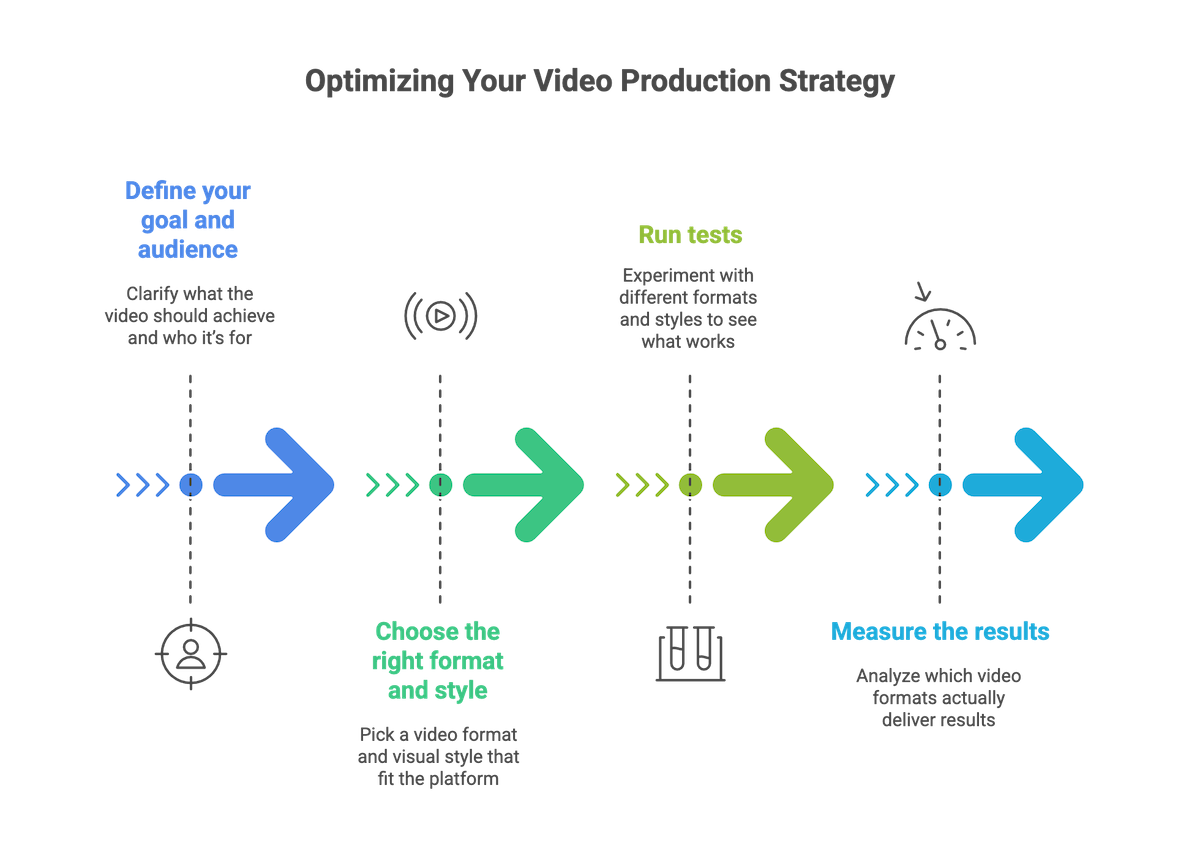
- Start with the goal and audience. Format is a tool, not the starting point.
- Adapt the style and format to the platform. TikTok is not LinkedIn.
- Test. See what works. Sometimes 15 seconds with a punchy CTA is enough.
- Measure results. Find out which formats actually convert.
Jeśli chcesz zobaczyć, co zrobić z filmem po publikacji i jak go realnie wykorzystać, zobacz jak promować film reklamowy i gdzie go dystrybuować.
FAQ – Frequently Asked Questions
Is it worth investing in a more expensive format on a tight budget?
Not always. For quick social campaigns, a short, well-targeted promo video can outperform a high-budget production.
How many versions of a video should we create?
Ideally 2–3: a full version, a shorter cut, and a vertical one. Good planning lets you shoot once and repurpose multiple formats.
Are animated videos better than live-action?
Depends on the goal. Animation is great for education. But if you want trust, real people work better.
How long should a promo video be?
On LinkedIn: 60–90 seconds. For TikTok or Reels: 15–30 sec. YouTube supports longer formats.
Is it worth creating videos for a narrow target group?
Yes. In B2B, niche-focused content often performs better than broad messaging.
Final thoughts
Choosing the right video format isn’t just a design choice. It’s one of the most impactful parts of campaign planning. Think of video as a tool. The form should follow the function: what you want to say, to whom, and where. A strategic format unlocks real results.
Masz już wybrany format albo chcesz sprawdzić, co faktycznie zadziała w Twoim przypadku? Napisz i opisz swój projekt, podpowiemy najlepsze podejście.