A corporate film is no longer a luxury, it is the standard. Whether it is a brand film, a product video, or a client testimonial, video content can directly drive sales and strengthen brand perception. The challenge begins when it comes to setting the budget. How much does it really cost? Where is it worth investing more, and where can you safely save? And how do you avoid a situation where you spend a lot of money but the film fails to deliver?
This guide is designed for companies planning video production and wanting to make sure that every euro spent actually works toward results.
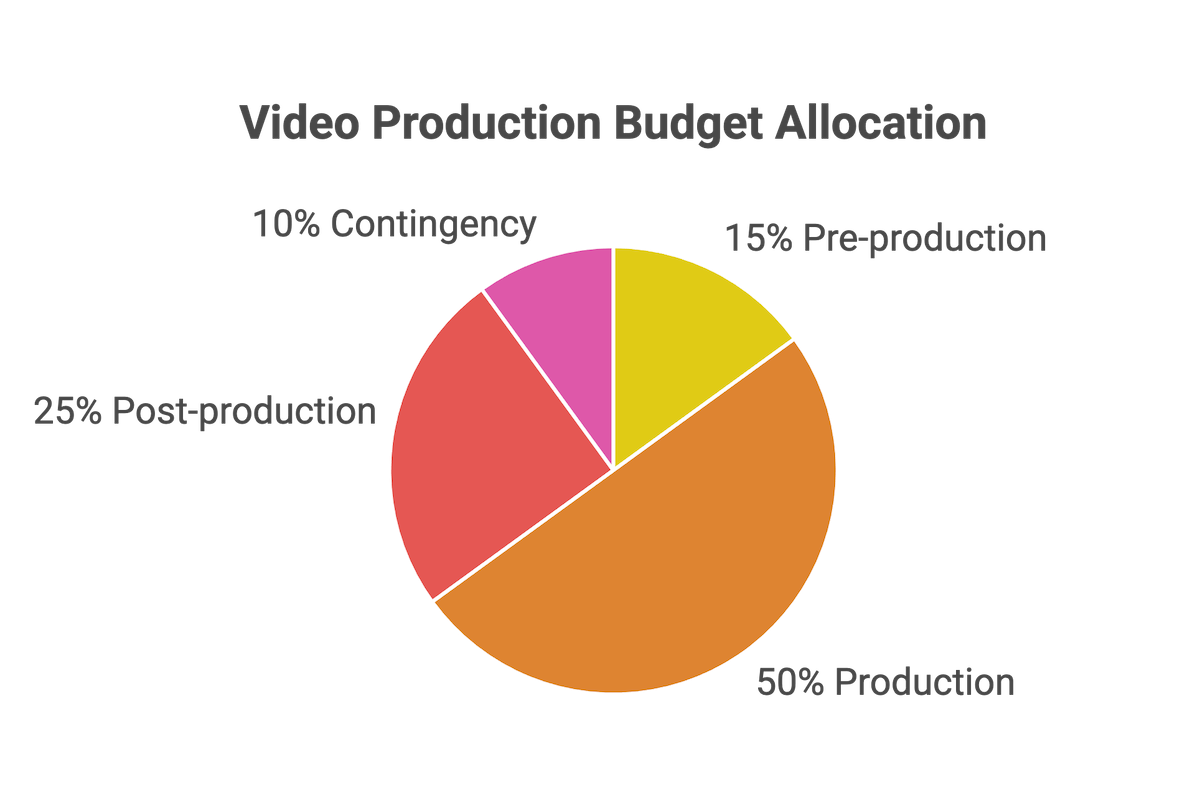
The three stages of a video budget and their role
Każda produkcja filmowa, niezależnie od skali, składa się z trzech głównych etapów. Zrozumienie ich proporcji to pierwszy krok do mądrego wydawania pieniędzy.
Pre-production
This is the preparation phase. Script, schedule, choosing locations, casting. Typically, 10–20 percent of the budget is allocated here. Every hour spent on planning is an hour saved during the shoot.
Production (filming)
This is usually the most expensive part. Crew, equipment, actors, transport, logistics. In Warsaw, a single shooting day can range from around €1,600 to €5,600 net, and even more for large-scale productions.
Post-production
Editing, music, graphics, animations, color grading, and preparing final files. Usually 20–30 percent of the budget.
Contingency
Niespodzianki w filmie zdarzają się zawsze. Zapas 10–15 procent budżetu chroni Cię przed kosztami pogody, opóźnień czy dodatkowych ujęć.
Jeśli chcesz zobaczyć, jak wygląda produkcja filmowa dla firm w praktyce i co realnie wpływa na koszty na każdym etapie, zobacz jak pracujemy i jakie podejście stosujemy przy realizacjach.
Dlaczego format filmu ma znaczenie dla ceny
- Brand videos – multiple locations, larger crews, high-quality visuals and sound. A format that builds brand image for years.
- Product videos – from simple demos to full commercials with actors and set design. Costs rise proportionally with the concept.
- Explainer videos – animations or graphics that explain how a product works. Most of the cost is in post-production.
- Testimonial – highly effective and relatively affordable. One location and a well-prepared interview is often enough.
- Recruitment videos – showcase company culture, usually filmed in the office over 1–2 days.
- Event coverage – main costs are crew and time, with simpler editing.
- Short social media videos – low cost per piece, but you need many. The key is batch production.
Jeśli nie masz pewności, jaki format będzie najlepszy dla Twojego celu i budżetu, zobacz jak dobrać rodzaj filmu do działań marketingowych.
Ten practical ways to save money
- Plan everything before the shoot – script, shot list, and schedule save time and money.
- Limit the number of locations – each new place means extra transport and time. Your own office can double as a studio.
- One day, multiple videos – batch production can cut unit costs by half.
- Match crew size to scale – a camera operator who also edits, or a producer who conducts interviews, reduces costs.
- Rent equipment – not every shoot needs a cinema camera. Mirrorless cameras and LED lights are often enough.
- Use stock footage – drone shots or music from a library cost far less than producing your own.
- Keep animation simple – motion design templates instead of complex 3D.
- Don’t overspend on music and voice-over – stock music and freelancers are good for most projects.
- Set clear revision rules – two rounds of feedback are standard.
- Always include a contingency – 10–15 percent extra gives peace of mind.
Where costs rise and where to cut
| Area | What drives up costs | How to optimize | What to watch out for |
|---|---|---|---|
| Pre-production | No script or schedule | Solid planning and shot list | Rushing prep extends shoot days |
| Production | Many shoot days and locations | Batch filming, office shoots | Too few locations can look repetitive |
| Crew | Oversized teams, overtime | Smaller crews, overlapping roles | Too few people may slow things down |
| Equipment | Top-end cameras and lights | Rent, choose fit-for-purpose gear | Never cut corners on sound |
| Post-production | Endless versions and revisions | Motion templates, 2 feedback rounds | Risk of looking too generic |
| Music & VO | Custom scores, celebrity voices | Stock music, freelancers, AI | Poor audio lowers professionalism |
| Contingency | No buffer | 10–15% extra set aside | Without it, you risk budget overruns |
The most common mistakes that push budgets up
- Underestimating details, like permits or music rights.
- Finalizing the script too late – changes on set are the most expensive.
- Skipping the contingency – every surprise breaks the budget.
- Overproduction – effects and locations that add no real value.
- Cutting corners on sound – audiences forgive shaky visuals, but not bad audio.
- No distribution plan – even the best video without promotion is a wasted investment.
Jeśli nie masz planu, co zrobić z filmem po publikacji, zobacz jak promować film reklamowy i gdzie go realnie wykorzystać.
Trends that help save
- AI – automated captions, fast language versions, simple voice-overs.
- Remote production – online directing with local crews cuts travel costs.
- Vertical video – short, vertical formats are cheaper per unit and boost reach.
- UGC (user-generated content) – authentic clips from clients or employees are cost-effective and powerful.
FAQ – common budget optimization questions
Is a shorter video always cheaper?
Usually yes, because fewer shots mean less editing. The exception is high-end animation, which can be expensive regardless of length.
When do you need a studio?
When you want full control over light and sound, or if you are planning a series of product videos. For testimonials or recruitment films, the office is often enough.
Can you film with a smartphone?
Yes, especially for short social ads where authenticity works. For brand and corporate films, professional production standards are better.
How many rounds of revisions should be planned?
Two. The first for content, the second for fine-tuning. Additional rounds should be budgeted separately.
When should you plan language versions?
At the start. Subtitles, translated graphics, and AI voice-overs are easiest when built into the workflow.
Should you always include a contingency?
Yes. 10–15 percent is standard. If you do not need it, you can spend it on promoting the film.
Final thoughts
Optimizing a film budget does not mean cutting quality. It means making deliberate choices. Better planning instead of chaos. Fewer locations and shoot days, but more content captured at once. Equipment chosen for the goal, not the prestige. Stock materials instead of expensive reshoots.
This way videos can be produced regularly without blowing the budget. Smart production turns video into a consistent marketing tool, not a one-off expense.
Chcesz zoptymalizować budżet i przełożyć go na realne efekty? Zobacz, jak wygląda produkcja filmowa dla firm or napisz i opisz swój projekt.